
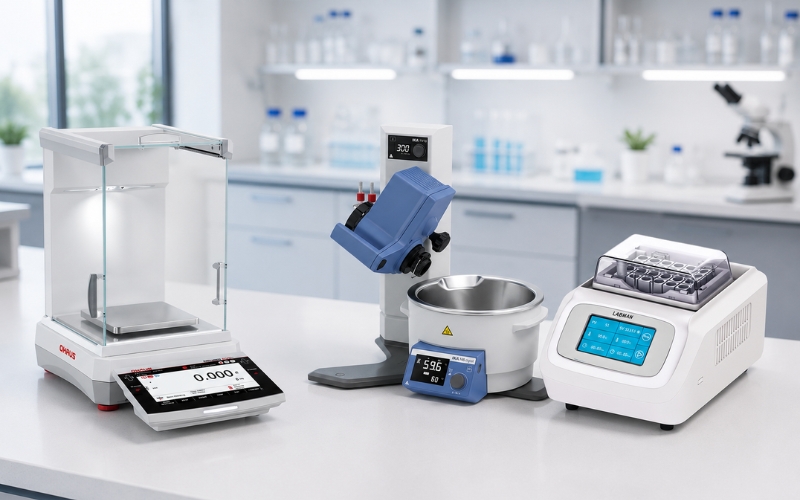
Setting up a research laboratory requires careful planning, the right scientific equipment, and a safe working environment. Whether you’re establishing a biotechnology laboratory, pharmaceutical research facility, educational laboratory, diagnostic center, or industrial testing lab, investing in the right laboratory infrastructure is essential for accurate research and efficient workflows.
A well-designed laboratory not only improves productivity but also ensures compliance with safety standards while supporting high-quality scientific research.
This comprehensive guide explains everything you need to know about setting up a modern research laboratory.
Define Your Laboratory Objectives
Before purchasing laboratory equipment, clearly identify the purpose of your laboratory.
Ask yourself:
- Will the laboratory focus on biological research?
- Is it intended for chemical analysis?
- Will it support pharmaceutical testing?
- Is it an educational or academic laboratory?
- Will it perform quality control or industrial testing?
Understanding your objectives helps determine the equipment, laboratory layout, and infrastructure required.
Plan the Laboratory Layout
A well-planned laboratory layout improves workflow and safety.
Consider the following areas:
- Sample preparation area
- Instrumentation zone
- Chemical storage room
- Cold storage section
- Washing and sterilization area
- Documentation workspace
- Waste disposal area
A properly organized laboratory reduces contamination risks and increases operational efficiency.
Essential Laboratory Equipment
Every research laboratory requires reliable scientific instruments to perform experiments and testing.
Core Equipment Includes:
- Laboratory Microscope
- Laboratory Centrifuge
- Analytical Balance
- Precision Balance
- Moisture Analyzer
- Laboratory Refrigerator
- Deep Freezer
- Ultra-Low Temperature Freezer
- Orbital Shaking Incubator
- Hot Air Oven
- Autoclave
- pH Meter
- Magnetic Stirrer
- Spectrophotometer
- Water Purification System
Choose equipment based on your research applications and laboratory capacity.
Invest in Quality Laboratory Furniture
Laboratory furniture contributes to safety and organization.
Essential furniture includes:
- Chemical-resistant work benches
- Storage cabinets
- Instrument tables
- Shelving units
- Laboratory stools
- Fume hoods
- Chemical storage cabinets
Select furniture that is durable, easy to clean, and resistant to chemicals.
Prioritize Laboratory Safety
Safety should be incorporated into every aspect of laboratory design.
Essential safety equipment includes:
- Safety goggles
- Laboratory coats
- Disposable nitrile gloves
- Face shields
- Fire extinguishers
- Emergency eyewash station
- Safety showers
- First aid kit
- Spill control kits
Proper safety equipment protects laboratory personnel and minimizes workplace hazards.
Establish Proper Storage Solutions
Many laboratory materials require controlled storage conditions.
Common storage equipment includes:
- Laboratory Refrigerators
- Deep Freezers
- Ultra-Low Temperature Freezers
- Chemical Storage Cabinets
- Sample Storage Cabinets
Proper storage helps preserve chemicals, biological samples, vaccines, reagents, and research materials.
Consumables are used daily and should never be overlooked.
Important laboratory consumables include:
- Micropipette Tips
- Test Tubes
- Beakers
- Petri Dishes
- Disposable Nitrile Gloves
- Laboratory Sealing Films
- Glass Slides
- Filter Papers
Using high-quality consumables improves research accuracy and laboratory efficiency.
Environmental factors can affect laboratory performance.
Maintain:
- Stable room temperature
- Proper ventilation
- Humidity control
- Dust-free environment
- Adequate lighting
- Clean working surfaces
Controlled conditions help protect sensitive laboratory instruments and improve experiment reliability.
Regular maintenance extends the life of laboratory equipment.
Maintenance Checklist:
- Calibrate weighing instruments regularly.
- Inspect microscopes and optics.
- Clean laboratory equipment after use.
- Schedule preventive maintenance.
- Replace worn components promptly.
- Maintain service records.
Routine servicing ensures consistent performance and accurate results.
Selecting the right supplier is just as important as choosing the equipment.
Look for a supplier that offers:
- Genuine laboratory equipment
- Trusted international brands
- Technical expertise
- Product guidance
- Installation support
- After-sales service
- Warranty
- Quick availability of spare parts
Working with an experienced supplier reduces downtime and ensures long-term reliability.
LabPrecise offers a comprehensive range of laboratory equipment and consumables for research laboratories, educational institutions, pharmaceutical companies, hospitals, and biotechnology facilities.
Available Products
- REMI Centrifuges
- Labomed Microscopes
- OHAUS Analytical Balances
- OHAUS Moisture Analyzers
- Laboratory Refrigerators
- Deep Freezers
- Ultra-Low Temperature Freezers
- Orbital Shaking Incubators
- Kimtech™ Nitrile Gloves
- Labserve Nitrile Gloves
- Parafilm® M Laboratory Sealing Film
With expert guidance and trusted products, LabPrecise helps laboratories build reliable and efficient research environments.
Setting up a research laboratory requires careful planning, quality equipment, proper infrastructure, and a strong focus on safety. From selecting microscopes and centrifuges to installing storage solutions and choosing reliable consumables, every decision impacts laboratory performance.
By investing in trusted scientific instruments and partnering with a reliable supplier, you can create a laboratory that supports accurate research, operational efficiency, and long-term growth. LabPrecise provides genuine laboratory equipment and expert support to help you build a modern research laboratory with confidence.
What equipment is essential for a research laboratory?
What equipment is essential for a research laboratory?
A research laboratory typically requires microscopes, centrifuges, analytical balances, incubators, refrigerators, freezers, pH meters, spectrophotometers, and laboratory consumables.
How do I plan a laboratory layout?
How do I plan a laboratory layout?
Plan separate areas for sample preparation, equipment, storage, sterilization, documentation, and waste management to improve workflow and safety.
Why is laboratory safety important?
Why is laboratory safety important?
Laboratory safety protects personnel, prevents accidents, maintains sample integrity, and ensures compliance with safety regulations.
How often should laboratory equipment be maintained?
How often should laboratory equipment be maintained?
Routine cleaning should be performed daily, while calibration and preventive maintenance should follow the manufacturer’s recommendations.
What should I consider when selecting laboratory equipment?
What should I consider when selecting laboratory equipment?
Consider your research objectives, accuracy requirements, equipment quality, maintenance, safety features, and supplier support before making a purchase.
Where can I buy laboratory equipment for a research laboratory?
Where can I buy laboratory equipment for a research laboratory?
LabPrecise offers genuine laboratory equipment, scientific instruments, and consumables from trusted brands to support research, healthcare, pharmaceutical, and educational laboratories.