
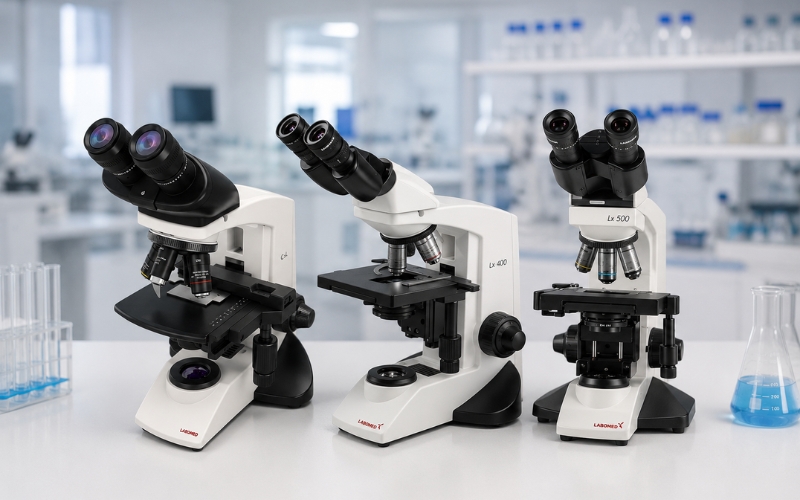
A laboratory microscope is one of the most essential scientific instruments used across research laboratories, hospitals, pharmaceutical companies, biotechnology facilities, educational institutions, and diagnostic centers. Whether you’re examining microorganisms, conducting biological research, or performing quality control inspections, selecting the right microscope plays a vital role in obtaining accurate and reliable observations.
With various microscope models available, choosing the ideal one can be overwhelming. Understanding your laboratory requirements, sample types, magnification needs, and imaging features can help you make an informed decision.
This guide covers everything you need to know before purchasing a laboratory microscope.
Why Choosing the Right Laboratory Microscope Matters
The right microscope improves observation quality, enhances research accuracy, and increases laboratory productivity. A microscope with the appropriate optical system and features allows users to analyze samples with greater precision while minimizing errors.
Benefits include:
- Clear and accurate imaging
- Improved research efficiency
- Reliable diagnostic results
- Better user comfort
- Long-term durability
- Reduced maintenance costs
Understand Your Laboratory Requirements
Before purchasing a microscope, identify how it will be used.
Consider the following questions:
- What type of samples will you observe?
- Is the microscope for routine testing or advanced research?
- Do you need digital image capturing?
- How frequently will the microscope be used?
- Will multiple users operate the instrument?
Your application determines the type of microscope best suited for your laboratory.
Types of Laboratory Microscopes
Monocular Microscope
Monocular microscopes are commonly used in schools and basic laboratories. They feature a single eyepiece and are suitable for educational purposes and simple observations.
Best For:
- Schools
- Training laboratories
- Basic biological studies
Binocular Microscope
Binocular microscopes offer two eyepieces for comfortable viewing and reduced eye strain during extended use. They are widely used in hospitals, research laboratories, and quality control facilities.
Ideal For:
- Clinical laboratories
- Pharmaceutical companies
- Diagnostic centers
- Research institutes
Trinocular Microscope
A trinocular microscope includes an additional camera port, allowing users to capture images and videos for documentation, analysis, and presentations.
Recommended For:
- Research laboratories
- Biotechnology labs
- Universities
- Digital imaging applications
Choose the Right Magnification
Magnification determines how much a sample can be enlarged for observation.
Common magnification levels include:
| Objective Lens | Total Magnification |
|---|---|
| 4X | 40X |
| 10X | 100X |
| 40X | 400X |
| 100X Oil | 1000X |
For routine laboratory work, microscopes offering magnification up to 1000X are generally sufficient.
Evaluate the Optical System
High-quality optics directly affect image clarity and accuracy.
Look for microscopes with:
- High-resolution objective lenses
- Anti-fungal coated optics
- Wide-field eyepieces
- Infinity-corrected optical systems
- Excellent color reproduction
Premium optical systems provide brighter images with improved contrast and sharpness.
LED Illumination vs Halogen Illumination
Modern laboratory microscopes primarily use LED illumination due to its efficiency and long lifespan.
LED Illumination
Advantages
- Bright and uniform lighting
- Low power consumption
- Minimal heat generation
- Long operating life
- Reduced maintenance
Halogen Illumination
Although still used in some laboratories, halogen lighting generates more heat and requires frequent bulb replacement.
For most laboratories, LED illumination is the preferred choice.
Mechanical Stage and Focusing System
A smooth mechanical stage improves sample positioning and observation.
Look for features such as:
- Coaxial coarse and fine focusing
- Mechanical X-Y stage
- Smooth movement controls
- Precision sample positioning
These features help improve workflow and reduce operator fatigue.
Digital Imaging Capabilities
Many laboratories require image documentation for reports and research.
A trinocular microscope allows users to connect a digital camera for:
- Image capture
- Video recording
- Research documentation
- Teaching presentations
- Remote collaboration
Digital imaging improves record keeping and research accuracy.
Ergonomics and User Comfort
Microscopes are often used for extended periods. Choosing an ergonomic design reduces strain on the neck, shoulders, and eyes.
Consider features such as:
- Adjustable eyepieces
- Comfortable viewing angle
- Smooth focus controls
- Stable base
- Lightweight design
Ergonomic microscopes improve productivity and operator comfort.
Why Choose Labomed Microscopes?
Labomed microscopes are known for delivering exceptional optical performance and long-term reliability. They are widely used in research laboratories, educational institutions, hospitals, and pharmaceutical companies.
Key advantages include:
- High-quality optics
- LED illumination
- Ergonomic design
- Digital imaging compatibility
- Durable construction
- Easy maintenance
- Excellent image clarity
LabPrecise offers genuine Labomed microscopes suitable for routine laboratory work as well as advanced scientific research.
Maintenance Tips for Laboratory Microscopes
Proper maintenance extends the lifespan of your microscope.
Best practices include:
- Clean lenses regularly using lens paper.
- Cover the microscope when not in use.
- Store in a dust-free environment.
- Avoid touching optical lenses with fingers.
- Check illumination periodically.
- Schedule routine servicing.
Routine maintenance ensures consistent performance and accurate observations.
Conclusion
Selecting the right laboratory microscope is an important decision that directly impacts research quality, diagnostic accuracy, and laboratory efficiency. Before purchasing, consider your application, magnification requirements, optical quality, illumination system, ergonomics, and imaging needs. Investing in a reliable microscope ensures precise observations, improved workflow, and long-term value.
Whether you need a binocular microscope for routine laboratory work or a trinocular microscope for advanced research and digital imaging, LabPrecise offers genuine Labomed microscopes backed by expert guidance and dependable support.
Which microscope is best for laboratory use?
Which microscope is best for laboratory use?
A binocular or trinocular microscope with LED illumination and high-quality optics is ideal for most laboratory applications.
What is the difference between a binocular and trinocular microscope?
What is the difference between a binocular and trinocular microscope?
A binocular microscope has two eyepieces for viewing, while a trinocular microscope includes an additional camera port for image and video capture.
What magnification is suitable for biological research?
What magnification is suitable for biological research?
Most biological research requires magnification up to 1000X using a 100X oil immersion objective.
Why is LED illumination preferred in laboratory microscopes?
Why is LED illumination preferred in laboratory microscopes?
LED illumination provides brighter images, consumes less power, generates less heat, and lasts much longer than halogen lighting.
How often should a laboratory microscope be serviced?
How often should a laboratory microscope be serviced?
Routine cleaning should be performed regularly, while professional servicing is recommended annually or according to manufacturer guidelines.
Where can I buy genuine laboratory microscopes?
Where can I buy genuine laboratory microscopes?
You can explore a wide range of genuine Labomed laboratory microscopes at LabPrecise, offering reliable products and expert support for research, education, and clinical applications.